Most companies in Croatia do not employ a full IT department. You have PCs, a printer that sometimes “just won’t”, a website, maybe remote access, and someone who “knows a bit more than the rest”. When something breaks, you call someone who fixes it — you pay by the hour, nerves calm down, and the cycle repeats.
That model works while things stay simple. Once the number of devices, users, or dependencies grows — especially when a site must stay up around the clock — a reactive approach gets expensive: downtime costs more than preventive work, and you never know what the next “urgent” hour will cost.
An external IT partner on a monthly retainer is not a replacement for a full-time engineer if you need someone in the office every day. But for many small businesses it is predictable spend and someone who knows your stack when it matters.
What a “monthly package” usually covers (and what it does not)
It depends on the offer, but a sensible baseline includes some of the following:
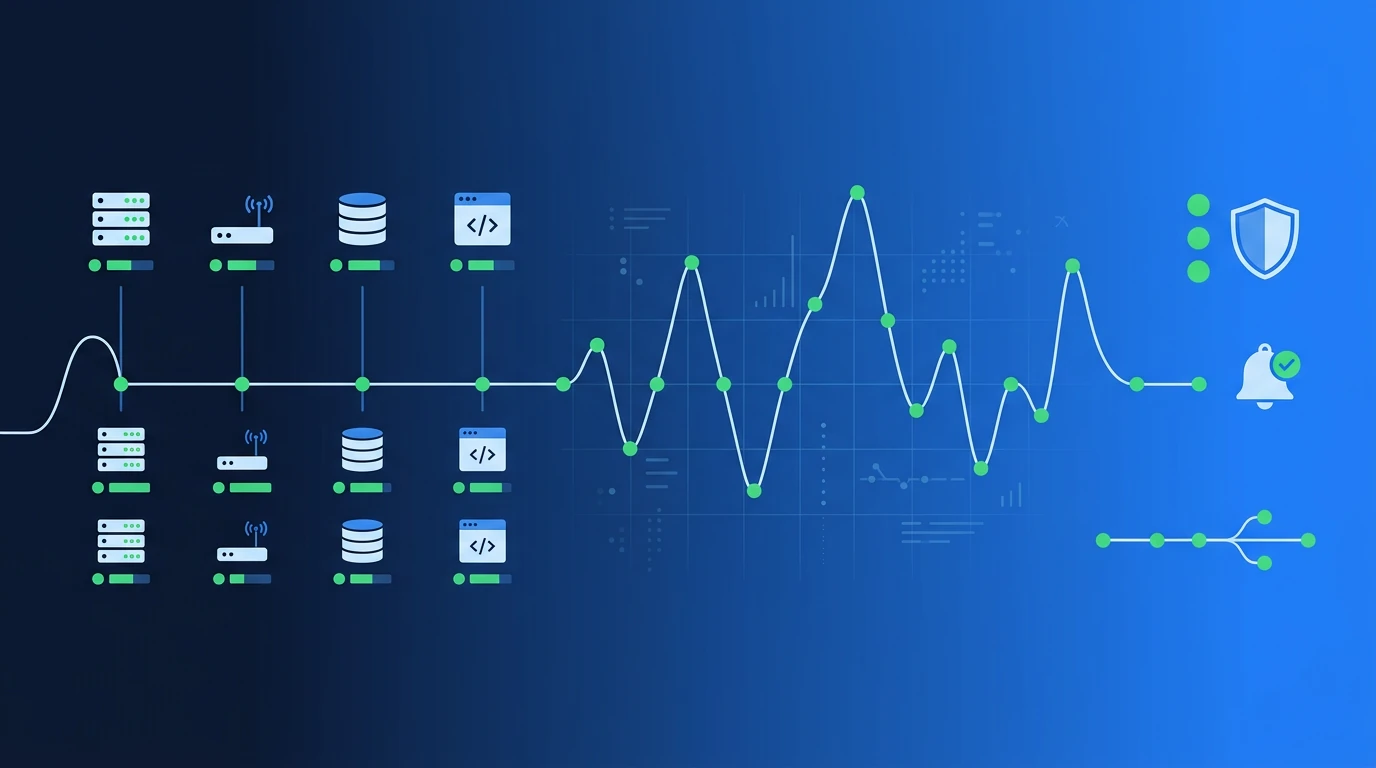
- Monitoring — is the site up, is the disk full, are core services healthy. Alerts before a client notices something is wrong.
- Regular communication — even a short monthly note (“what we checked, what we suggest”) helps IT stay on the radar while everything looks quiet.
- Response priority — agreed time-to-first-reply on email or tickets; production outages can be shorter, low-priority items can wait 24h.
- Included hours — many plans bundle e.g. 1–6 hours; beyond that you agree extras or move up a tier. That is fair: you know what you pay for.
What is not realistic at the lowest tier: a personal 24/7 phone line for every minor question, or unlimited software installs without scoping. Good partners say that upfront.
Why monitoring is not “being paranoid”
It is not about spying on staff. It is about seeing a disk at 95% full before MySQL refuses writes on a Monday morning. Or catching DNS or SSL issues before a customer sends you a screenshot of an error.
We covered reactive vs proactive support in more detail in the proactive IT monitoring article — same idea: an hour of planned work is often cheaper than three hours of emergency firefighting.
Choosing a partner without the buzzword bingo
Ask questions you can verify:
- Who handles incidents — one person or a team? What happens during vacation?
- Where data lives — especially backups and email; aligned with GDPR and your contracts.
- How you report issues — one email, a ticket system, phone reserved for critical only?
- What happens when you exceed included hours — transparent pricing or vague “we will discuss”?
If you only get a slide deck without numbers, keep looking.
Outsourcing should not be fear-selling
Some vendors sell nothing but hacker horror stories. Risk is real, but healthy collaboration starts with order in access, documentation, and backups, not constant alarmism. Look for someone who explains why they recommend something, not only what.
In short
If you do not have an in-house IT team, a monthly package makes sense when you want predictability, continuity, and early warning before a failure becomes a crisis. It is not magic — but it is often cheaper than a chain of unrelated emergency calls.
Pricing tiers from basic monitoring to broader support are on the site; the inquiry form helps match scope to your size — no obligation if you only want an assessment.
Need help with this topic?
ANIM offers free assessments for small and medium businesses. Get in touch and let's discuss your needs.
Free assessment